
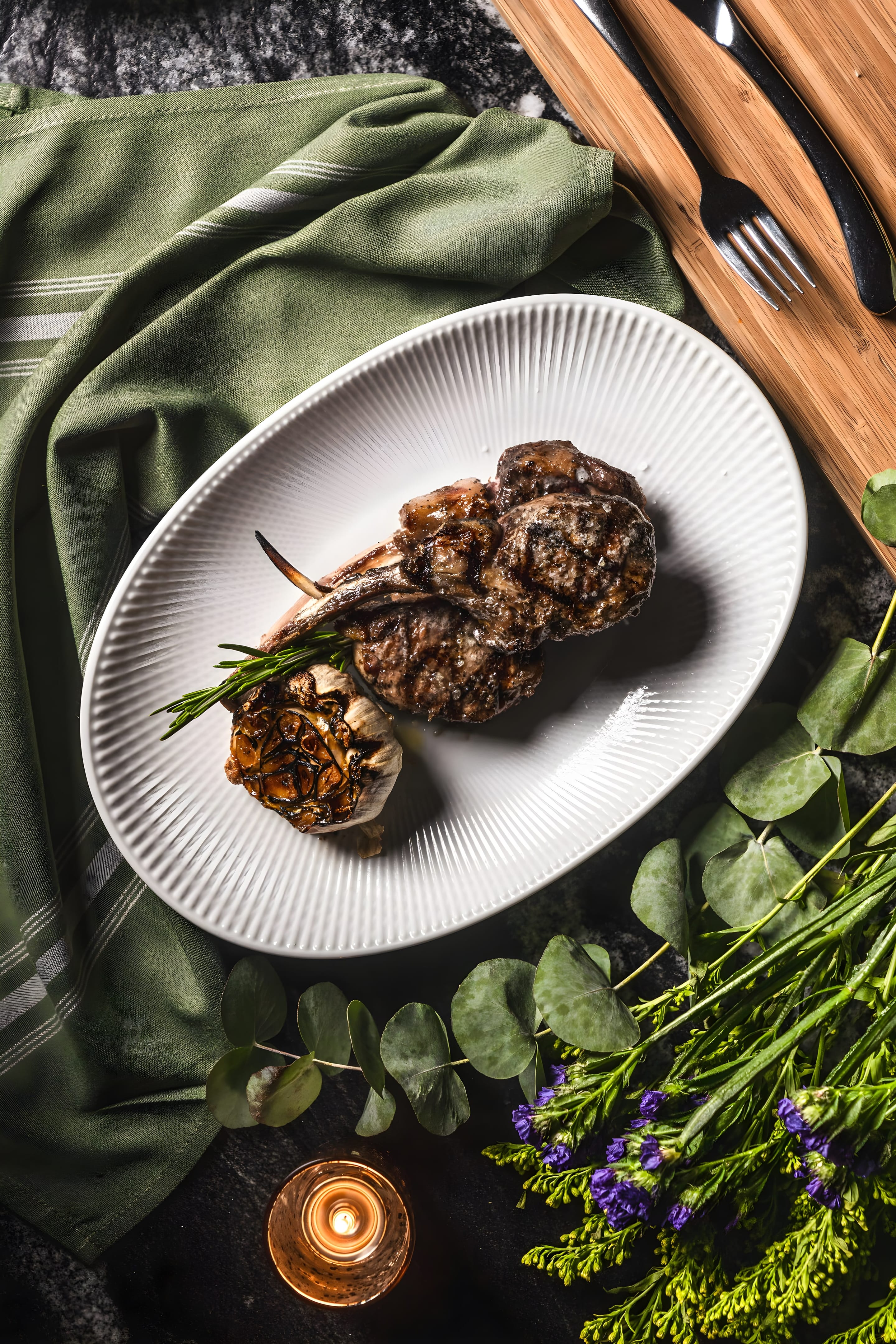
Dry-aged beef is beef that rests uncovered in a cold, humidity-controlled room with steady airflow for weeks before it is cut and cooked. Moisture evaporates and concentrates the flavor, natural enzymes make the meat more tender, and the dried outer crust is trimmed away. At Ember & Eagle, the dry-aged steaks on our dinner menu are aged 45 and 60 days, including a Pat LaFrieda 60-day porterhouse and cowboy ribeye.
Dry-aged is one of the most common words on a steakhouse menu, and one of the least explained. Here is what it means, what the number of days changes, and how to choose the right aged steak when you sit down.
What is dry-aged beef?
Dry-aged beef is beef that has been stored, unwrapped, in a carefully controlled cold room for an extended period, usually weeks, before it is portioned into steaks.
Most beef sold in supermarkets is wet-aged instead: sealed in plastic and aged in its own juices. Dry-aging takes more time, more space and more skill, and it produces a steak with a deeper, more concentrated flavor.
How dry-aging works: temperature, humidity, airflow and time
Four conditions control the process. General guidance across the industry looks like this:
ConditionTemperature
- Typical range
- Just above freezing, about 33°F to 38°F
- What it does
- Keeps the meat safe while it ages
ConditionHumidity
- Typical range
- About 75% to 85%
- What it does
- Lets moisture leave slowly without the meat drying out too fast
ConditionAirflow
- Typical range
- Steady, gentle air movement
- What it does
- Dries the surface evenly and forms the protective crust
ConditionTime
- Typical range
- Commonly 14 to 60 days, sometimes longer
- What it does
- Sets how far flavor and tenderness develop
Moisture loss concentrates the flavor
As water leaves the muscle, the beef shrinks, often by 10% to 30% depending on the cut and the length of aging. What remains has a more intense, beefier taste.
Natural enzymes make the meat more tender
Enzymes already inside the beef keep working during aging, slowly breaking down muscle fibers and connective tissue. The result is a more tender bite.
The crust is trimmed before cooking
A hard, dark crust forms on the outside of the beef. It protects the interior and is cut away before the steaks are portioned, so the part on your plate is the aged interior.
Dry-aged vs. wet-aged beef
How it ages
- Dry-aged
- Uncovered, in a controlled cold room
- Wet-aged
- Sealed in plastic in its own juices
Flavor
- Dry-aged
- Concentrated, nutty, savory, sometimes funky
- Wet-aged
- Milder and fresher
Texture
- Dry-aged
- Tender, with a denser bite
- Wet-aged
- Tender and juicy
Weight and trim loss
- Dry-aged
- High: water evaporates and the crust is trimmed
- Wet-aged
- Very little
Where you find it
- Dry-aged
- Steakhouses and specialist butchers
- Wet-aged
- Most supermarkets
Cost
- Dry-aged
- Higher
- Wet-aged
- Lower
What 21, 45 and 60 days taste like
The number of days changes the steak more than most diners expect. Many steakhouses age for around 21 to 28 days, or do not list a number at all.
Aging timeAbout 21 to 28 days
- Flavor
- Beefy, with a light aged note
- Texture
- Noticeably more tender than fresh beef
- Who it suits
- First-time dry-aged diners
Aging time45 days
- Flavor
- Deep, nutty and buttery, with clear dry-aged character
- Texture
- Very tender
- Who it suits
- Diners who want real dry-aged flavor without a strong funk
Aging time60 days
- Flavor
- Bold and complex, with notes often compared to blue cheese or aged game
- Texture
- Very tender, with a richer crust when grilled
- Who it suits
- Diners who already love dry-aged beef and want the most intense version
Many steak lovers describe 45 days as the sweet spot. At 60 days, flavor becomes more intense and opinions divide, which is part of the appeal.
The dry-aged steaks on our menu
Every steak below is prime beef, grilled over open flame. This is the current lineup on the Ember & Eagle dinner menu; menus change seasonally.
CutPrime New York Strip
- Weight
- 12 oz
- Aging
- 45 days
- Best for
- One guest who wants a first taste of dry-aged beef
CutPat LaFrieda Prime Tomahawk
- Weight
- 42 oz
- Aging
- 45 days
- Best for
- A table sharing a showpiece cut
CutPat LaFrieda Prime Cowboy Ribeye
- Weight
- 24 oz
- Aging
- 60 days
- Best for
- Ribeye lovers ready for full dry-aged intensity, or two guests sharing
CutPat LaFrieda Prime Porterhouse
- Weight
- 36 oz
- Aging
- 60 days
- Best for
- A shared steak with two cuts in one: the strip and the tenderloin
Why our longest-aged steaks are bone-in cuts
Well-marbled, bone-in prime cuts handle long aging best. The bone and the fat cap protect the meat during aging and add depth to the flavor. That is why the 60-day steaks on our menu are the porterhouse and the cowboy ribeye.
Which dry-aged steak should you order?
- Never had dry-aged beef? Start with the 12 oz 45-day New York strip.
- Love ribeye? The 24 oz 60-day cowboy ribeye shows what long aging does to a well-marbled cut.
- Sharing with the table? The 36 oz 60-day porterhouse or the 42 oz 45-day tomahawk. Our guide to porterhouse or cowboy ribeye compares the two 60-day cuts.
- Not sure how strong you like it? Order one 45-day and one 60-day cut for the table and taste them side by side.
- Prefer a milder steak? The 8 oz prime filet mignon and the 10 oz prime skirt steak are on the menu too.
Ask at the table: Your server can talk you through each cut and its aging, and we will help you match a bottle to it. Browse the cellar before you arrive.
How we cook dry-aged steak
Our steaks are grilled over open flame. Sauces come on the side so the beef leads: bordelaise, caper salsa verde, béarnaise, red pepper steak sauce and black truffle emulsion.
Because dry-aged beef has lost moisture and carries more concentrated fat on the surface, it sears quickly and chars faster than fresh beef. Medium-rare is a common recommendation for dry-aged steak, since cooking well past medium mutes the aged flavor you are paying for.
Why dry-aged steak costs more
- Time: the beef occupies a controlled aging room for weeks.
- Shrinkage: water evaporates, so there is less meat by weight at the end.
- Trim: the dried crust is cut away and cannot be sold.
- Selection: long aging suits well-marbled prime cuts, which cost more to begin with.
Frequently asked questions
How does dry-aged beef not go bad?
Dry-aging happens in a cold, humidity-controlled environment with steady airflow, and the dried outer crust that forms is trimmed away before cooking. The controlled conditions are what separate aging from spoilage.
Is dry-aged beef better than regular beef?
It is different. Dry-aged beef has a more concentrated, nutty flavor and a more tender texture. Some diners prefer the milder taste of wet-aged beef, which is why a menu with both is useful.
Are grocery store steaks dry-aged?
Most supermarket steaks are wet-aged, sealed in plastic. Dry-aged beef is usually found at steakhouses and specialist butchers, and it is labeled as dry-aged.
Does dry-aged steak taste dry?
No. “Dry” describes the aging method, not the cooked steak. The dried crust is trimmed away, and the interior cooks up juicy and tender.
What is the longest you should dry-age a steak?
Most dry-aged steaks are aged between 21 and 60 days. Aging beyond 60 days is possible, but the flavor becomes very strong and the trim loss grows. We serve our dry-aged cuts at 45 and 60 days.
Where can I get dry-aged steak in Monmouth County, NJ?
Ember & Eagle in Eatontown serves 45-day and 60-day dry-aged prime steaks, including Pat LaFrieda cuts, Tuesday to Saturday. It is inside Suneagles Golf Club, and members and non-members are welcome.
Taste the difference in Eatontown
The best way to understand 45 and 60 days is to taste them. Our kitchen, led by Executive Chef Dennis Mathews and chef and partner Ryan DePersio, grills every dry-aged cut over open flame. Meet the team, then reserve a table up to four weeks ahead.